

THE ART OF THE ITINERARY
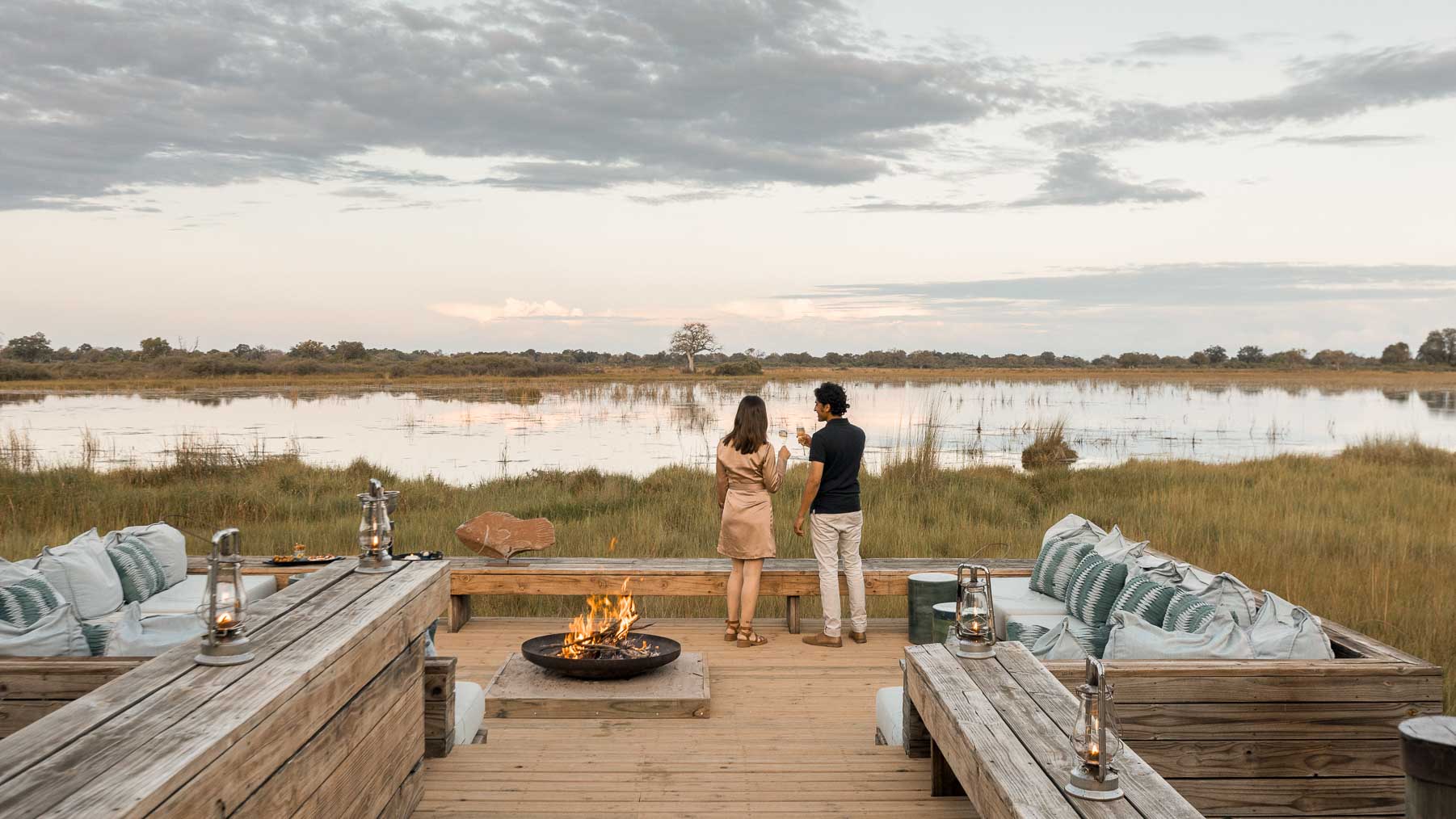
The light changes twice before breakfast in the Okavango. First, a pale wash over the floodplain as fish eagles call from the dead ivory trees. Then, as the mokoro slides through papyrus and the sun clears the palms, the water turns the colour of hammered brass. By the time you sit down to coffee, you have already seen a pod of hippos yawn open like a drawbridge and a jacana pick its way across lily pads as though the water were solid ground. Three days later, you are standing in cool highland air at four thousand feet, listening to a silverback strip bamboo twenty metres away, the delta and its heat a different world entirely.
No single place in Africa can give you both of these mornings. A well-designed itinerary can.
That is the quiet challenge at the heart of every safari worth taking. Africa is not one destination but a continent of them, each with its own rhythm, light and cast of characters. The difference between a trip that feels rushed and disjointed, and one that unfolds like a story with a beginning, a heart and a resolution, rarely comes down to which camps you chose. It comes down to how the days between them were built.
WHY THE BEST SAFARIS ARE DESIGNED, NOT ASSEMBLED
It is tempting to plan an African safari the way you might plan a shopping list: the Serengeti, because of the wildebeest; Cape Town, because everyone should see the Cape; Victoria Falls, because it is on the way. Each destination is worthy on its own terms. Strung together without thought for pacing, distance or contrast, they can leave travellers more exhausted than moved, hopping between airstrips with barely enough time to learn a guide’s name before moving on.
The safaris that stay with people are rarely the ones that tried to see the most. They are the ones with a shape. A slow build. A change of scenery precisely when the last one had given all it had to give. A closing chapter that lets the whole journey settle before the flight home.

Designing that shape is less about ticking off geography and more about understanding what each region, camp and season can actually offer a particular traveller, and in what order those experiences will mean the most.
HOW MUCH TIME DOES A SAFARI NEED
There is no universal answer, but there are useful guideposts.
A first safari benefits from focus rather than breadth. Five to seven days spent properly in one or two well-chosen areas, such as a private concession in the Sabi Sands paired with a night or two in Cape Town, gives newcomers time to settle into the rhythm of early starts and slow afternoons without feeling like the trip is a checklist.
For travellers who already know they love this kind of journey, eight to twelve days opens up genuine contrast: perhaps the Okavango Delta’s floodplains followed by Hwange’s dry-season herds and a finish at Victoria Falls, or the short-grass plains of the southern Serengeti paired with the crater floor of Ngorongoro. Two weeks or more allows for a proper multi-country arc, such as gorilla trekking in Rwanda’s Volcanoes National Park followed by open savannah in Kenya or Tanzania, with an island finish in Zanzibar or the Seychelles.
As a general guide:
- 5–7 days — one or two areas, deep immersion, minimal transit
- 8–12 days — two to three contrasting regions or countries
- 12+ days — a genuine multi-country journey, often spanning bush, mountain and coast
Longer is not automatically better. A trip that tries to include everything usually ends up truly experiencing very little.
THE RHYTHM OF A WELL-PACED JOURNEY
Nights per camp matter more than most travellers expect. Arrive after dark, rise before dawn for a game drive, spend the afternoon packing, and you have given a remarkable place barely a full day of your attention. As a rule of thumb, three nights is the minimum for a camp to reveal itself properly: enough time for a slow morning, a change in the weather, a guide to notice what genuinely interests you rather than what interests most guests.
Two nights can work for a secondary stop with a single clear purpose, such as a short stay built purely around one sighting or activity. But a safari built entirely from one-night stands, however scenic, rarely allows for the moments that make a trip memorable: the guide who doubles back because they heard something in the reeds, the afternoon storm that changes everything, the dinner conversation that runs long because nobody is checking a watch.
CHOOSING LANDSCAPES, NOT JUST COUNTRIES
The most satisfying itineraries are built around contrast, not proximity. Pairing two similar savannah experiences back-to-back can feel repetitive, however excellent each is individually. Pairing a wide-open plain with a flooded delta, a mountain forest, or a stretch of coastline gives a journey its texture.

Consider some pairings that tend to work well together:
- Okavango Delta and Rwanda’s Volcanoes National Park — water and mountain, savannah and rainforest, in the space of a week
- Sabi Sands or Kruger and Victoria Falls — Big Five country followed by the drama of one of the continent’s great natural landmarks
- Serengeti and Zanzibar or the Seychelles — dust and plains giving way to salt air and stillness
- South Luangwa and Lower Zambezi — two of Zambia’s finest reserves, connected without the complexity of crossing borders
The sequencing matters too. Beginning with the most demanding early-start destination and finishing somewhere gentler, whether that is a spa-minded lodge in the Cape Winelands or a private beach in Mozambique, gives a trip a natural close rather than an abrupt one.
GETTING BETWEEN CAMPS: ROADS, RUNWAYS AND THE RIGHT TRADE-OFFS
How you move between destinations shapes an itinerary as much as where you go. Road transfers within a single reserve can be a pleasure in their own right, offering game viewing along the way and a genuine sense of the landscape’s scale. Between regions or countries, light aircraft charters are usually the better choice: a ninety-minute flight over the Delta or the Rift Valley replaces what might otherwise be a full day of driving, and delivers you to camp with the afternoon still ahead of you.

Fly-in circuits generally cost more than road-based itineraries, but the time they return is often the difference between an itinerary that breathes and one that does not. A good specialist will know which legs are worth the additional charter and which stretches genuinely benefit from a scenic drive.
A few practicalities worth building in from the outset:
- Allow a buffer day when connecting international flights with charter schedules, particularly on the first and last legs of a trip
- Pack in soft-sided bags for light aircraft, which typically have strict weight and luggage limits
- Confirm visa and health requirements for every country on the itinerary well ahead of departure, as they can differ significantly even between neighbouring nations
TIMING THE JOURNEY
Season shapes an itinerary as much as geography does. East Africa’s dry months, broadly June to October and again in the shorter window from January to March, concentrate wildlife around remaining water and offer the clearest game viewing. Southern Africa’s dry winter, roughly May to October, does the same across Botswana, Zimbabwe and South Africa’s lowveld. The green season that follows, when afternoon storms return the bush to life, suits travellers drawn to newborn wildlife, dramatic skies and quieter camps, and is worth its own consideration when the itinerary allows for flexibility.

For journeys built around a specific event, such as the wildebeest migration’s river crossings or the gorilla trekking permits in Rwanda and Uganda, timing needs to be locked in early. Permits and peak-season camps at the best-known properties are often reserved nine to eighteen months in advance.
THE SAFARI GURU APPROACH
We think of itinerary design as the part of the process that matters most, and the part most often rushed. It is not simply a matter of matching a budget to a map. It means understanding whether a traveller wants to talk to their guide over a slow breakfast or be back in the vehicle at first light every day, whether children need shorter game drives and a pool between activities, whether a couple wants total privacy or the camaraderie of a shared vehicle.
Deon De Villiers built Safari Guru around journeys shaped this way, drawing on more than fifteen years spent guiding and living across the African bush. That first-hand knowledge, of which camps sit quietly beside a river and which overlook a busy waterhole, of which regions are worth the extra charter flight and which are better skipped this time, is what separates an itinerary assembled from a list of famous names and one built specifically around the traveller taking it.
Every Safari Guru journey begins with a conversation, not a proposal. We ask about the kind of mornings you want, the pace you travel best at, and what would make this particular trip feel like it was designed for no one else.
PLANNING YOUR OWN JOURNEY
An African safari rewards patience in the planning as much as in the bush. The right itinerary is rarely the one with the most destinations. It is the one with the right ones, given enough time to matter, arranged in an order that lets each place do its work before the next begins.
If you are ready to start shaping a journey of your own, whether that is a first safari built around one exceptional region or a multi-country route spanning savannah, mountain and coast, we would love to help you design it. Get in touch with the Safari Guru team to begin planning a safari itinerary built entirely around you.